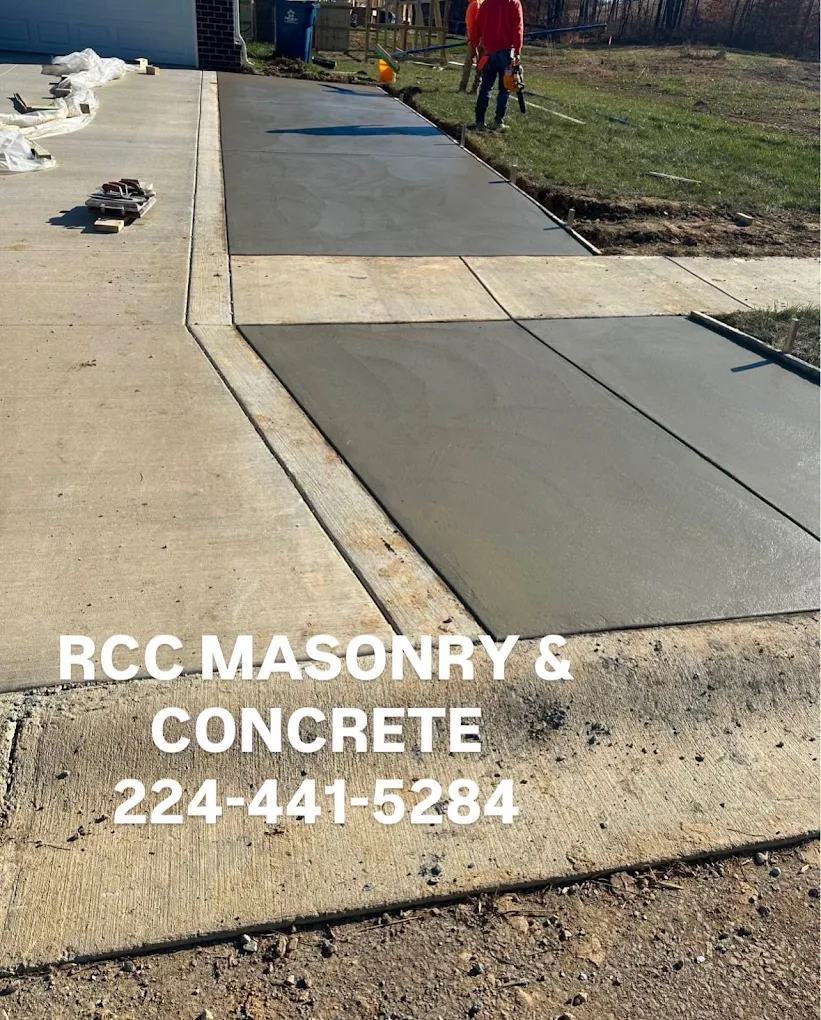
"Cement driveway." "Cement patio." "Pour some cement." You hear it constantly — and it's almost always wrong. Cement and concrete are not the same thing, and understanding the difference helps you make smarter decisions about any project around your home or business. Here are the facts.
The Short Answer: Cement Is an Ingredient, Concrete Is the Product
The simplest way to remember it: cement is to concrete what flour is to cake. Cement is a fine gray powder. On its own, it's just one component. Concrete is the finished, rock-hard material you get when you mix that cement with water, sand, and stone. So every concrete driveway contains cement — but cement by itself would never make a usable driveway.
What Cement Actually Is
Cement is made by heating limestone and clay to extreme temperatures, then grinding the result into a powder. The most common type, Portland cement, was patented in the 1800s and named after a building stone it resembled. When cement powder meets water, it begins a chemical reaction (hydration) that causes it to harden — and that reaction is what binds concrete together. Used alone, cement is brittle and cracks easily, which is why it's almost never used by itself for structural work.
What's Inside Concrete
Concrete is a recipe with four main ingredients:
- Cement (~10–15%) — the binder that glues everything together.
- Water (~15–20%) — triggers hydration so the cement can cure.
- Sand (fine aggregate) — fills the small gaps for a dense, smooth mix.
- Gravel or crushed stone (coarse aggregate) — provides bulk and most of the strength.
Together, the sand and stone make up roughly 60–75% of the mix. The cement-and-water paste coats each piece of aggregate and locks it all into a single solid mass as it cures.
Why the Mix Ratio Matters
Getting the proportions right is everything. Too much water makes concrete easier to pour but significantly weaker and more prone to cracking — a common shortcut that leads to early failure. Too little water, and the mix won't cure properly or finish smoothly. Professional crews control the water-to-cement ratio carefully because it directly determines the strength and lifespan of the finished slab.
Understanding PSI (Concrete Strength)
Concrete is graded by its compressive strength in PSI (pounds per square inch). Here's how it generally breaks down:
- 3,000 PSI — light-duty applications like some footings and interior pads.
- 4,000 PSI — the standard for residential driveways and patios.
- 4,500–5,000 PSI — heavy commercial slabs, warehouse floors, and industrial loads.
Choosing the right PSI for the job is one of the clearest signs of a contractor who knows what they're doing. Pouring a garage floor at the same strength as a garden walkway is a recipe for premature cracking.
Why This Matters Even More in Illinois
In Northern Illinois, the mix isn't just about strength — it's about surviving winter. Exterior concrete needs to be air-entrained, meaning it contains microscopic air bubbles that give freezing water room to expand without flaking the surface. With dozens of freeze-thaw cycles each season, concrete poured without air entrainment can start spalling within just a few years. The right mix, proper drainage, and avoiding de-icing salt are what separate concrete that lasts decades from concrete that fails fast. If your existing surfaces are already showing damage, our concrete repair team can help.
The Bottom Line
Next time someone mentions a "cement driveway," you'll know they mean concrete. More importantly, you'll understand that what's inside that concrete — the right cement content, water ratio, PSI, and air entrainment — determines whether it lasts five years or fifty. Want to learn more surprising facts? Read our companion guide on fascinating facts about concrete.
At RCC Masonry & Concrete, we match every mix to the job and to Illinois weather, so you get concrete that's built to last. Explore our concrete services or call (224) 441-5284 for a free estimate across McHenry & Lake County.