Foundation Underpinning
When the soil beneath a foundation can no longer carry the load, we deepen and strengthen it — transferring your building's weight down to stable ground or bedrock. Engineered solutions for sinking homes, additions, basement projects, and commercial structures across Northern Illinois.
What is Foundation Underpinning?
Foundation underpinning is the structural process of strengthening and deepening an existing foundation by transferring its load to deeper, more stable soil or bedrock. In Northern Illinois, it corrects settlement caused by expansive clay, frost heave, and poor original footings — and is also used to support added building loads or protect a structure during adjacent excavation.
Foundation Underpinning — Quick Facts
- •Underpinning extends a foundation down to stable, load-bearing strata using mass concrete bays, reinforced beam-and-base systems, or driven steel/helical piers.
- •Used for both residential and commercial buildings: settlement repair, basement lowering or additions, supporting extra stories, and protecting structures next to new excavation.
- •Typical cost: $1,200–$2,500 per pier or section; whole-structure projects commonly run $15,000–$100,000+ depending on method and depth.
- •Engineer-designed and sequenced in controlled bays so the building stays supported throughout.
- •Service area: McHenry County, Lake County, and surrounding Northern Illinois communities.
What Is Underpinning?
Underpinning extends an existing foundation downward so its weight rests on deeper, stronger soil instead of the unstable ground causing it to move. The result: settlement stops, cracks stabilize, and the structure is safe to keep — or to build on top of.
1. The footing loses support
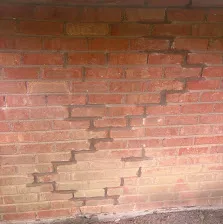
Expansive clay, frost heave, or undersized original footings let part of the foundation sink, cracking walls and tilting the structure.
2. We build new support deeper
Working in small, engineered sections, we install concrete bays, beams, or steel piers that reach firm, load-bearing ground.
3. The load transfers down
The building's weight bypasses the weak soil entirely and rests on stable strata — a permanent fix that won't shift with the seasons.
Our Underpinning Methods
There's no single "right" way to underpin — the correct method depends on your soil, how deep stable ground sits, the load, and site access. A structural engineer specifies the approach and the safe sequence for your project.
Mass Concrete (Pit) Underpinning
Best when stable soil sits relatively close beneath the footing.
We excavate beneath the existing footing in short, alternating bays and fill each with high-strength concrete down to firm soil. Working one numbered bay at a time keeps the building fully supported throughout.
Beam & Base Underpinning
Best for spreading load and bridging localized weak spots.
A reinforced concrete beam is cast under or beside the wall and spans onto deeper concrete bases or piers. The beam redistributes the building's weight away from failing ground onto solid bearing points.
Mini-Piled / Push Pier Underpinning
Best when stable strata are deep or access is tight.
Heavy-duty steel push piers or helical piers are driven through the weak soil until they reach bedrock or dense load-bearing soil. Brackets then transfer the foundation load directly onto the piers — often allowing some lift back to level.
How Underpinning Is Used
From a settling family home to a warehouse adding heavy equipment, underpinning solves the same core problem — not enough support — across very different buildings.
Residential
- Stop a sinking or settling foundation that's cracking walls and sticking doors
- Support a sagging room addition or porch that was built on shallow footings
- Lower or deepen a basement to gain headroom and finished living space
- Strengthen the foundation before adding a second story
- Stabilize a home built on filled, disturbed, or expansive clay soil
Commercial & Industrial
- Correct settlement in retail buildings, offices, and multi-unit properties
- Increase load capacity for new machinery, mezzanines, or added floors
- Protect and shore an existing structure during adjacent excavation or new construction
- Stabilize warehouse and industrial slabs over weak or variable soils
- Restore assisted-living and apartment foundations while keeping the building occupied
Engineered, Sequenced, Documented
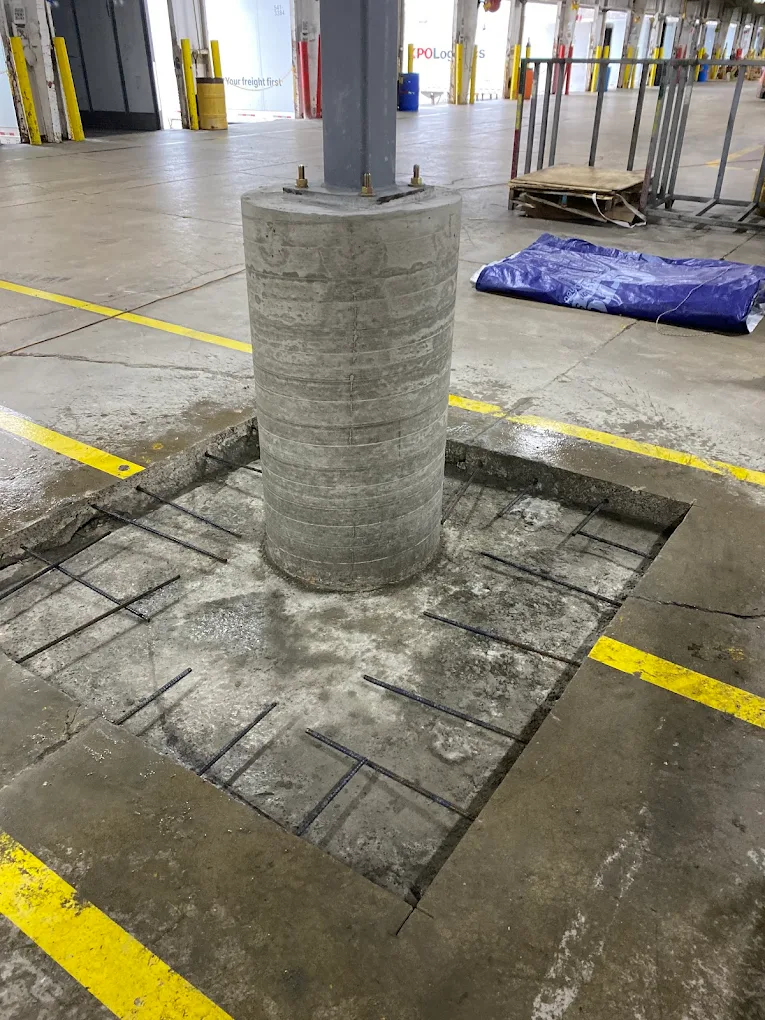
Underpinning is structural work that has to be done in the right order. We work to an engineer's design, excavate in short alternating sections so the building is never left unsupported, and document the depths reached and load transferred for your records.
In most projects the home stays livable or the business stays open while we work from the exterior or isolated interior pits.
Signs Your Foundation May Need Underpinning
A few hairline cracks are normal. Underpinning becomes the answer when movement is ongoing and the soil itself can no longer support the load. Watch for:
Our Underpinning Process
Structural Assessment & Soil Investigation
We inspect the foundation, document settlement and cracking, and evaluate soil conditions to determine how deep stable, load-bearing strata sit beneath the footing.
Engineered Design & Sequencing Plan
A structural engineer specifies the underpinning method (mass concrete, beam-and-base, or piered) and a bay-by-bay sequence so no more than a small section of foundation is ever unsupported at once.
Controlled Excavation in Bays
We excavate beneath the existing footing in short, alternating sections, shoring as needed, exposing the underside of the foundation without undermining the structure.
Install New Support & Transfer Load
Each bay is filled with mass concrete, tied into a reinforced beam, or supported on driven steel or helical piers. The building's weight is then transferred onto the new, deeper support.
Dry-Pack, Backfill & Verify
The gap between new support and existing footing is dry-packed for full bearing contact. Excavations are backfilled, levels are checked, and the completed work is documented.
Why Underpinning Is So Common in Northern Illinois
McHenry and Lake County sit on glacial-deposit clay soils that act like a sponge — swelling when saturated in spring and shrinking during summer droughts. This constant volume change moves the ground beneath foundations unevenly, a phenomenon engineers call differential settlement. When one part of a footing drops while an adjacent part stays put, the resulting stress cracks walls and racks door and window openings.
Compounding this, the Northern Illinois frost line reaches roughly 42 inches deep. Footings that don't extend below that depth are exposed to frost heave, lifting and dropping with each freeze-thaw cycle. Many older homes and small commercial buildings were also founded on shallow or undersized footings that simply don't meet the demands placed on them today — especially when an addition, a second story, or heavy equipment increases the load.
Surface repairs like crack injection treat the symptom; underpinning treats the cause. By carrying the structure's weight past the troublesome upper soil and onto stable, deeper strata — or driven steel piers seated in dense load-bearing soil or bedrock — the foundation no longer depends on ground that moves. That's why underpinning is considered a permanent solution rather than a patch, and why it's the right call whenever settlement is active or you plan to add significant load.
RCC matches the method to the conditions: mass concrete where firm soil is shallow, beam-and-base to bridge weak zones and spread load, and mini-piled or push-pier systems where stable ground is deep or access is restricted. Every project follows an engineered design and a strict bay-by-bay sequence so the building stays safely supported from start to finish.
Underpinning FAQs
Worried Your Foundation Is Settling?
Get a free on-site assessment. We'll confirm the cause, explain whether underpinning is the right fix, and give you a clear written estimate — for homes and commercial buildings across McHenry & Lake County.
Areas We Serve
Professional masonry & concrete services across McHenry & Lake County, IL.