
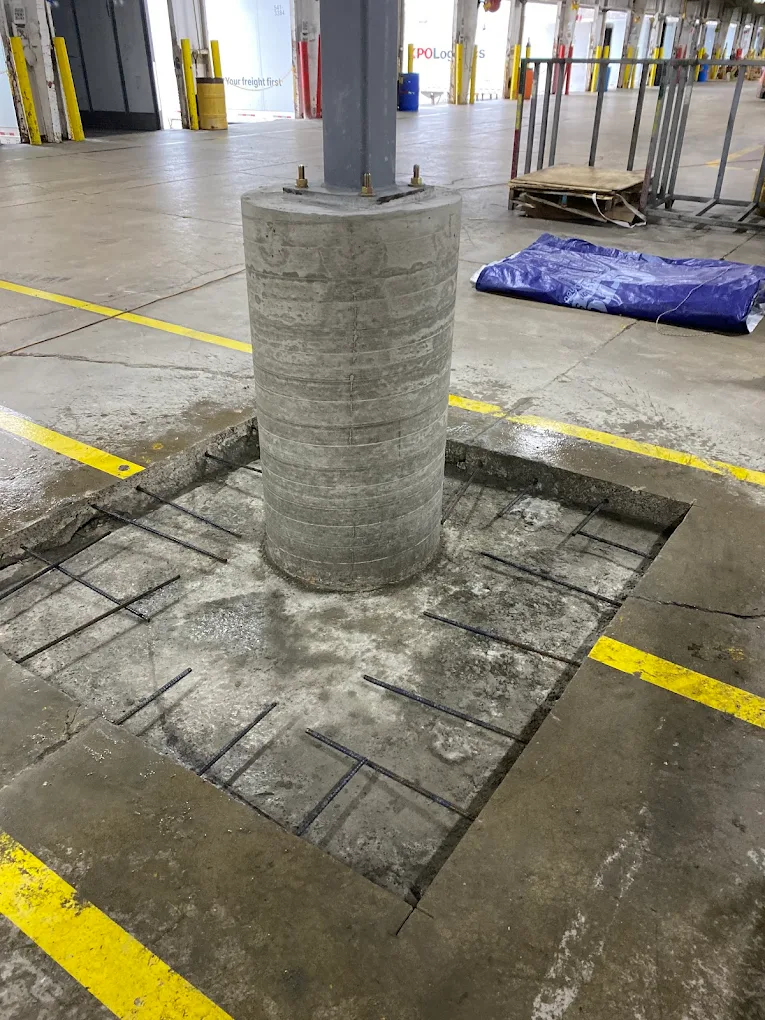
Bollards look simple — steel posts in the ground — but installing them correctly means getting four things right: spacing, height, footing depth, and code compliance. Get those wrong and you either fail to stop a vehicle, block an accessible route, or watch the posts heave out of the ground after a Northern Illinois winter. This guide walks through the standards storefront and commercial property owners should know in 2026.
At RCC Masonry & Concrete, we install code-compliant safety bollards for businesses throughout McHenry County and Lake County. Below is the same guidance we give our commercial clients before a single post goes in the ground.
How Far Apart Should Bollards Be?
For protecting a storefront, entrance, or pedestrian area, bollards are generally spaced 3 to 5 feet on center. The logic is straightforward: the gap between posts must be narrow enough that a vehicle can't drive through it, yet wide enough to keep a comfortable, code-compliant walking path. A common rule of thumb is to keep clear spacing at 4 feet or less to reliably block a passenger vehicle, while never dropping the usable pedestrian opening below the ADA minimum.
Spacing also depends on what direction the threat comes from. A glass storefront facing a head-in parking lot — where a driver could hit the gas instead of the brake — needs a continuous protective line. A single entry door off a sidewalk might only need a post on each side. We assess each property's approach angles, traffic patterns, and pedestrian flow before recommending a layout.
Proper Bollard Height
Most fixed protective bollards stand 36 to 42 inches above grade. That range is high enough to engage a vehicle's bumper and front body panel, visible to drivers approaching at low speed, and consistent with what pedestrians instinctively read as a barrier. Posts shorter than about 30 inches risk being overridden by a tall truck or SUV bumper; posts much taller than 42 inches start to obstruct sightlines and look out of place. For high-visibility safety, many businesses choose a reflective band or a bright sleeve in the standard 36–42 inch range.
Footing Depth: The Part Nobody Sees
What's below grade matters as much as what's above it. In Northern Illinois, the frost line reaches roughly 42 inches, and any footing that stops short of it is subject to frost heave — the seasonal lifting and tilting that makes shallow-set posts lean within a year or two. A sound bollard footing is typically a 12-inch-diameter hole, 3 to 4 feet deep, with the steel pipe set in concrete and the pipe itself filled with concrete for added impact mass.
This is the single most important detail and the one cut-rate installers skimp on. A bollard with a beautiful finish but a shallow footing will fail when it's tested — by a vehicle or by winter. The same frost-depth engineering that protects our foundation work and commercial concrete applies directly to bollard footings.
ADA and Accessible-Route Requirements
Bollards aren't an ADA fixture themselves, but they must never compromise an accessible route. Key rules to respect:
- Clear width: any walking path between or beside bollards must maintain at least 36 inches of clear passage
- Ramps and entrances: bollards can't intrude into required ramp landings, door maneuvering clearances, or curb-ramp paths
- Detectability: posts shouldn't create unexpected protruding hazards along a path of travel
The goal is balance: a layout dense enough to stop a vehicle but open enough to keep the pedestrian route fully compliant. This is exactly why spacing is a design decision and not a one-size-fits-all number.
Fire Code and Local Ordinances
Beyond protecting your storefront by choice, some bollards are required. Fire codes and local ordinances frequently mandate protective posts around fire hydrants, fire-department connections (FDCs), gas meters, generators, and electrical equipment located near drive aisles. Fuel-dispensing locations have their own placement rules, and many municipalities require protection in front of certain commercial entrances. Because these requirements vary between McHenry and Lake County jurisdictions, confirming with the local building and fire departments before installation is essential — and it's something we handle as part of the project.
Permits and Inspections
Commercial bollard installation often requires a permit, especially when work touches an accessible route, a fire lane, or a public right-of-way. A reputable contractor checks permitting requirements before digging, pulls the permit where needed, and schedules any required inspection. Skipping this step can lead to fines or being ordered to remove and reinstall the work — an expensive way to save a little upfront.
Material and Finish Standards
For storefront protection, a 4-inch Schedule 40 steel pipe filled with concrete is the standard. Where higher impact resistance is needed — fuel stations, drive-thrus, exposed building corners — a 6-inch Schedule 80 post is the stronger choice. In our salt-heavy winters, a protective finish is not optional if you want longevity: powder coating or hot-dip galvanizing fights the corrosion that attacks the post base where snowmelt and de-icing salt collect. Bright safety-yellow sleeves add visibility and a clean, professional look.
Planning Your Bollard Layout
A good bollard plan starts with three questions: What am I protecting? From what direction could a vehicle approach? And what pedestrian paths must stay clear? From there we map post locations that block the threat, hold ADA clearances, satisfy any code-required protection, and look intentional rather than scattered. If you're budgeting, our companion article on commercial bollard installation cost breaks down the pricing for each of these choices.
Get Code-Compliant Bollards Installed Right
Spacing, height, footing depth, and code compliance all have to come together for bollards to actually do their job. RCC Masonry & Concrete designs and installs code-compliant steel-and-concrete bollards for businesses across McHenry County and Lake County. See full details on our commercial bollard installation page, then call (224) 441-5284 or request a free estimate to plan your layout.